
Journal · November 2, 2026
You own a lot. You don't own a house yet. To a bank those are two different things, and how the build gets paid for starts there.
A regular mortgage lends against a finished house that an appraiser can walk through. On your lot there is nothing to walk through yet, only the land and a set of plans. So a build is usually paid for in stages, with money released as the house goes up, and the loan becomes an ordinary mortgage once the house is done.
Plenty of people in Brevard are in this spot. The 2026 preliminary tax roll lists 29,560 vacant residential lots with a street address in the county, and 17,719 of them, about 60%, are owned by individuals rather than companies or other organizations. In Palm Bay alone that is 13,721 lots. And 2,134 of those lots sold in 2025, 1,579 of them in Palm Bay. If you are one of them, the question is what it takes to put a house on the land.
A construction-to-permanent loan closes once. During the build the lender pays out in draws as stages are finished, and the loan turns into your mortgage when the house is done. The draw schedule and what you pay along the way are set by the lender.
A short-term construction loan pays for the build, and a separate mortgage pays it off when the house is finished. That means two approvals and two closings, and the second loan is priced on the market at that time.
No draws and no lender inspections between stages. You still want the payment schedule in writing before the slab goes in.
Which one fits depends on your lender and your finances. We work with preferred lenders who have closed Gibraltar homes before and who underwrite you up front, so a contract doesn't fall apart halfway through. Construction-to-perm and new-construction loans aren't new territory for a lender who has closed our houses.
Then there are two purchases, the land and the house, and you can pay for them separately or roll them together. Land loans exist, and their terms vary a lot from lender to lender and with whether the lot is ready to build on. Ask before you assume anything. Some lot buyers pay cash for the land and finance only the house. Whether that makes sense for you is a question for your lender.
We can help with the lot as well. Sometimes we buy the lot and roll it into construction. A minimum down payment still applies, and we'll tell you if it doesn't fit. Before you offer on land, read what to know before you buy a lot.
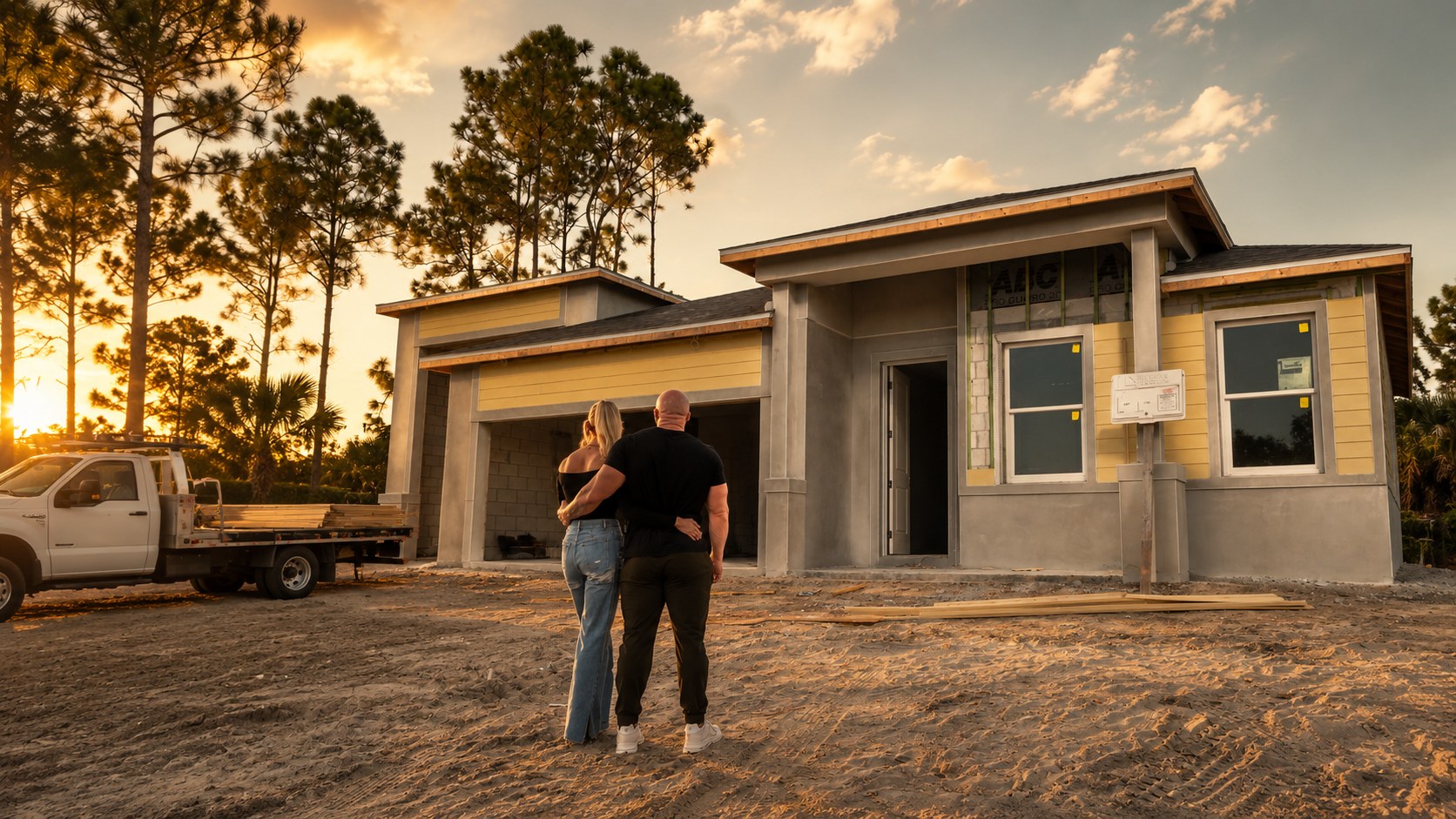
If you already own a buildable lot, its value can count toward your down payment. On our side, buildable lot equity can go toward the house, so you bring less cash to the table. How it counts is the lender's call, and not every lender handles land the same way, so ask yours directly.
Expect a lender to ask for things like the recorded deed in your name, a current boundary survey, and an appraisal that values the lot and the finished house. If you still owe money on the land, that payoff comes out first. Ask how they value a lot you bought recently compared with one you have owned for years.
You don't have to be pre-approved to start a lot review with us. Send the address or parcel number and we'll check whether the lot is ready to build on and which of our seven plans fits it. Build On Your Lot lists what to have ready, and our Palm Bay page covers the lot questions that come up most there.
Florida assesses real property as of January 1, and an improvement that isn't substantially completed on that date gets no value, under section 192.042(1) of the Florida Statutes. While your house is unfinished on January 1, you are taxed on the lot. Plan for the bill to change once the finished house is on the roll. The Florida taxes on the loan itself, note stamps and intangible tax, are covered in our post on closing costs.
Insurance during the build is its own question. Builder's risk coverage is the usual answer for a house under construction. Ask your lender and your builder, us included, who carries it and when your homeowners policy needs to start.
Get the answer before you pick a plan, because it changes how much cash you need.
And if it is two, what happens if rates or my situation change before the second one.
Who inspects before each draw, how long a draw takes, and what I pay while the house is going up.
Builder's risk during construction, homeowners insurance at the end, and any flood coverage the lot calls for.
Deed, survey, income paperwork, and anything else on their list, so the file is ready when the plan is.
The financing step is laid out on the home buying process page, and the ways to buy, including lot trades, are on The Gibraltar Difference. If you are renting while you sort this out, a finished home may be the faster path.
Send us the address or parcel number through our contact page, or call (321) 401-6003, and we'll tell you whether lot equity can go toward the house.
Sources: Florida Department of Revenue, Brevard County 2026 preliminary tax roll (NAL) and sales file (SDF), counted November 2, 2026. "Individuals" means the owner name has no business or organization marker, such as LLC (even when the roll cuts it off at 30 characters), Inc, Properties, Investments, Holdings, or a homebuilder, church or government name. Florida Statutes (2026), s. 192.042. Loan terms, rates and down payments come from your lender, not from us.
Send the address or parcel number. We'll check the lot, match a plan to it, and tell you whether lot equity can go toward the house.